Article
How to Select a Planetary Gearmotor: 6 Questions to Answer First
June 21, 2026
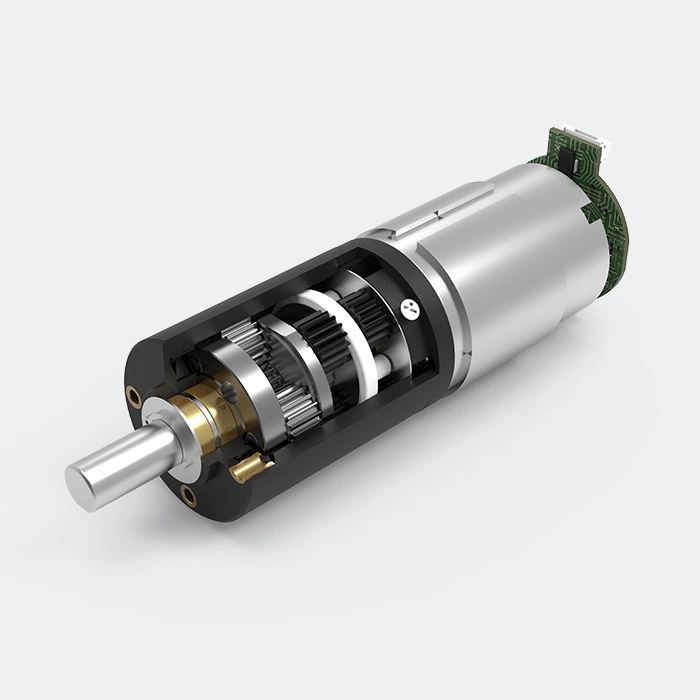
A planetary gearmotor is often selected because it delivers useful torque in a compact package. The right choice, however, is not a diameter or reduction ratio alone. It is the combination of the load, motion profile, available space, motor input, and production requirements.
Use the six questions below to prepare an initial selection brief. They also make a supplier inquiry faster and more accurate.
1. What space is available?
Start with the maximum outside diameter, overall length, mounting pattern, shaft interface, and cable exit constraints. These packaging limits may narrow the candidate gearbox range before electrical performance is considered.
2. What output speed does the application need?
Specify the desired output speed and whether it must stay constant under load. The gearbox ratio connects the motor speed to the required output speed, but the final selection still needs to account for load and efficiency.
3. What torque is required during normal operation and at peak?
Separate continuous torque from start-up, acceleration, and occasional peak torque. Include the load type where possible: direct drive, wheel, belt, lead screw, valve, or another mechanism. This prevents a selection based only on a short peak event or only on an unloaded speed.
4. What motor input is available?
Share the available voltage, preferred motor type, control method, and any current limit. For a gearmotor assembly, the motor and gearbox must be matched as one motion system rather than chosen independently.
5. How demanding is the motion profile?
State the duty cycle, number of starts and stops, direction changes, expected service life, operating temperature, and noise or backlash sensitivity. These requirements affect the validation plan as much as the nominal ratio does.
6. What does the project need beyond the gearmotor?
An inquiry may also involve a housing, mounting bracket, wiring, electronics, or final assembly. Sharing these dependencies early allows KEY-CRON to coordinate the relevant suppliers and reduce handoff risk around the primary gearmotor.
A useful request-for-quote checklist
For the fastest first response, include: application, target diameter or installation envelope, target output speed, continuous and peak torque, voltage, desired ratio if known, quantity, target timing, and drawings or photos when available.
The final choice should always be confirmed against the relevant product data and application testing. If some values are not known yet, send the application context first; a structured discussion is a better starting point than guessing a part number.