
Partner-backed precision plastics
Precision Injection-Molded Parts
Coordinate precision plastic gears, housings, and molded parts from resin and DFM through tooling, trials, approval, controlled production, and delivery.
Typical components
Gears, carriers, housings, functional partsDocumented partner resource
50+ electric machines · 30T–300TControl path
Resin · DFM · tooling · trials · approval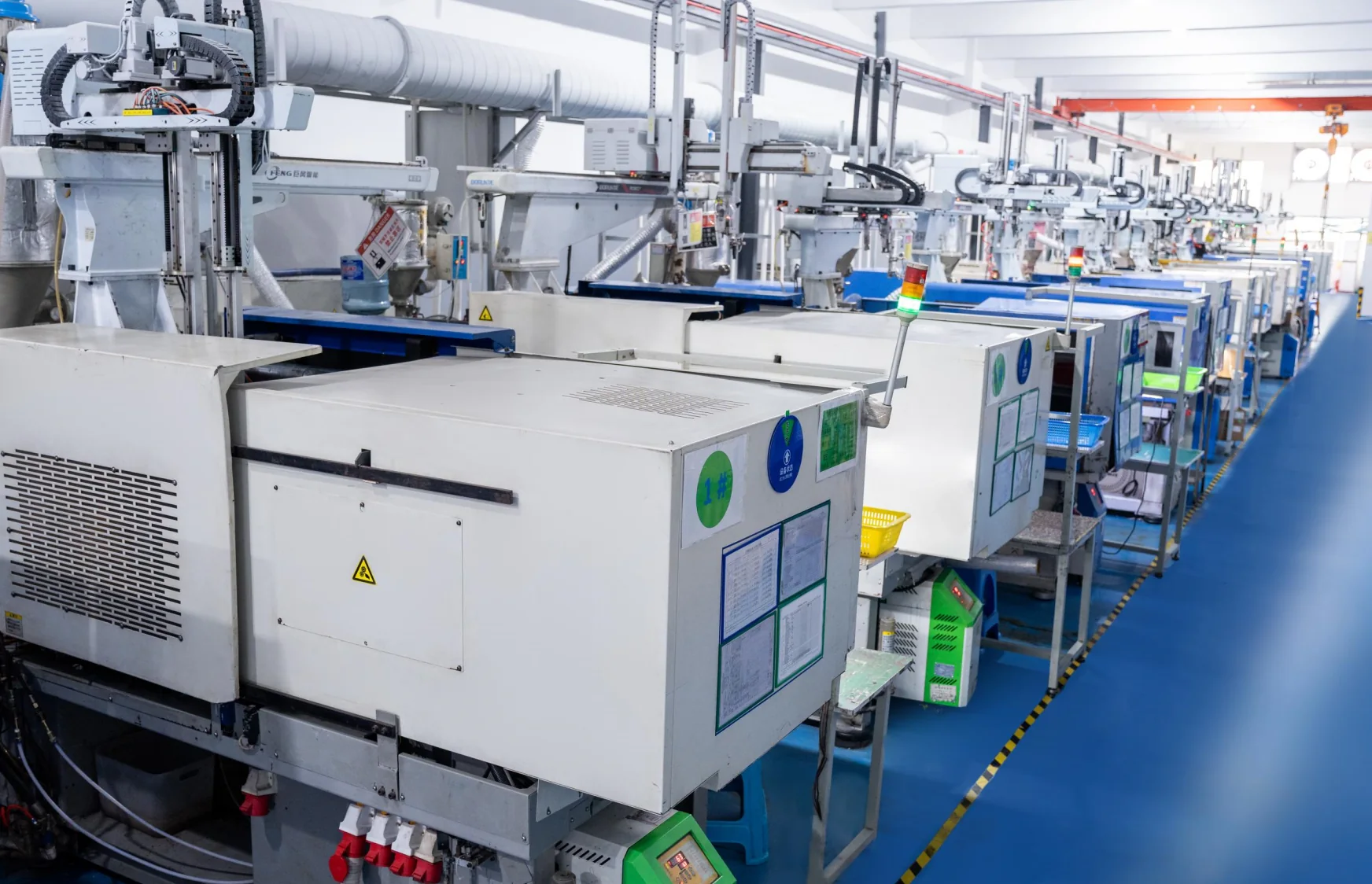
Precision molding begins with a controlled product definition
Plastic gears, carriers, housings, covers, and structural components can combine tight interfaces, sliding or rotating contact, cosmetic surfaces, snap fits, inserts, seals, and long-term environmental exposure. The injection machine is only one element. Repeatable production depends on the relationship between product requirement, resin grade, part geometry, mold, process window, inspection, conditioning, assembly, and change control.
KEY-CRON coordinates this path with a long-term manufacturing partner in Zhuhai and, when appropriate, other specialized suppliers. The partner relationship must remain visible: the factory operates the molding process; KEY-CRON coordinates product requirements, decisions, records, and delivery scope with the customer.
Documented partner capability—and its boundary
The supplied 2025 partner materials document more than 50 imported electric injection molding machines from 30T to 300T, supported by in-house tooling and inspection resources. This is useful evidence of breadth, not proof that every part belongs on every machine.
For each RFQ, confirm:
- legal entity and production site;
- machine model, tonnage, shot size, tie-bar and platen fit, controls, and auxiliary equipment;
- mold ownership, location, interface, hot runner, inserts, and automation;
- material handling, drying, contamination, color change, regrind, and traceability rules;
- inspection, test, capacity, shift, maintenance, packing, and delivery plan;
- current certification entity, site, scope, and validity when relevant.
Resin definition
Function before family name
“PA,” “POM,” “PC,” or “ABS” is not a controlled material specification. Review load, impact, fatigue, friction, wear, creep, temperature, moisture, chemical exposure, UV, flammability, electrical, appearance, and applicable regulatory needs. For gears and moving parts, lubrication, counterface, duty cycle, noise, and dimensional stability may be critical.
Grade, additives, and substitutions
The released requirement should identify the exact grade or an approved-material list, color, reinforcement, lubricant, flame rating, UV package, recycled-content rule, and required declarations. Any alternate resin needs a defined approval route because shrinkage, flow, wear, color, and dimensions can change even within one material family.
Conditioning and measurement
Some materials change dimensions and properties with moisture or temperature. Define drying, conditioning, storage, measurement environment, and timing where they affect acceptance.
DFM before tooling
A useful DFM review connects the part to the molding and inspection plan. It should address:
- nominal and transition wall thickness, flow length, ribs, bosses, and sink risk;
- draft, texture, shutoffs, parting, sliders, lifters, inserts, and ejection;
- gate type and location, weld lines, vents, cooling, and expected appearance;
- shrinkage and warpage assumptions, datum strategy, tolerances, and measurement;
- flash, gate vestige, ejector marks, knit lines, gloss, color, and cosmetic zones;
- assembly stack, snap fits, press fits, bearings, shafts, seals, screws, and adhesives;
- cavity strategy, cavity identification, expected volume, maintenance, and spare inserts;
- functional tests, wear or noise checks, packaging, and handling.
The output should record accepted changes, open items, assumptions, and the revision released for mold quotation.
Tooling, trials, and sample learning
Tooling specifications should define cavity count, mold base and steel where required, expected life, runner and gate, ejection, cooling, inserts, texture, hot-runner or control interfaces, spare parts, sampling, ownership, and acceptance. The mold tooling and DFM page describes this path in more detail.
A first trial proves that the mold can produce parts under recorded conditions; it does not prove a stable production process. Trial stages should record machine, cavity, resin lot and drying, settings or process window, cycle, part condition, dimensions, appearance, assembly, function, deviations, and actions.
Approval strategy
Dimensional approval
Use functional datums and an agreed measurement method. Identify conditioning, fixture, equipment, sampling, cavity, and reporting requirements. For plastic gears, coordinate relevant profile, runout, meshing, backlash, torque, noise, wear, or assembly checks according to the application rather than using a single generic “precision” statement.
Appearance approval
Mark visible zones and define color, texture, gloss, sink, flow, weld line, gate, ejector, flash, contamination, scratch, and allowable variation. An approved boundary sample or signed appearance sample is more useful than subjective language alone.
Functional approval
Test the part in the representative assembly and environment. Fit alone may not reveal creep, wear, thermal movement, chemical response, sealing, fatigue, noise, or mechanism load.
Production release and ongoing control
Before release, align:
- controlled product and mold revisions;
- approved resin, colorant, additives, and substitution authority;
- production site, machine family, cavity identification, process window, and key settings;
- incoming, in-process, final, functional, and appearance checks;
- sampling, capability or trend evidence where required;
- approved samples, limit samples, packaging, labels, and traceability;
- nonconformance, rework, deviation, complaint, corrective-action, and change process.
Supplier, site, resin, colorant, regrind rule, mold, cavity, process, auxiliary equipment, inspection, or packaging changes may affect the product. The notification and approval threshold should be written before production.
Evidence and documentation
Depending on risk, the project may require resin or colorant records, dimensional reports, cavity results, appearance approval, process records, material declarations, functional data, gear measurement, lot traceability, packaging approval, nonconformance history, or customer-specific quality documents. Only agreed records are included; certification, PPAP, FMEA, control plans, or regulatory evidence are not automatic.
Best-fit projects
KEY-CRON is strongest when the molded part interacts with a planetary gearmotor, gear train, housing, metal structure, electronics, or final assembly and the customer benefits from one English-speaking project path. Commodity parts with mature tooling, no cross-part interfaces, and a nominated high-volume molder may be purchased more efficiently through the direct factory.
Connected paths
Place this capability inside the full project path.
Small Western teams rarely buy one isolated process. They balance the motion system, structural parts, electronics, testing, and delivery. These entry points help you continue from the right angle.
Prepare a molded-part review
Start with function, resin, interfaces, and production intent.
A CAD model is useful, but it does not define the whole molded part. Share what the component must do, where it fits, how it will be judged, and what is still open.
- STEP or native 3D model, dimensioned drawing, revision status, and mating-part information
- Part function, load, wear, temperature, chemicals, moisture, UV, flame, medical, food-contact, or other environmental needs
- Specified resin grade, color, additives, recycled-content rule, approved alternatives, and required material declarations
- Critical dimensions and datums, gear or moving interfaces, appearance zones, texture, allowable defects, and measurement method
- Prototype and annual volume, target life, cavity or tooling assumptions, sample timing, and launch schedule
- Functional, dimensional, noise, wear, reliability, packing, traceability, and documentation requirements
Related paths
FAQ
Questions to clarify before scoping this capability.
Does KEY-CRON own the injection molding factory shown on this page?
No. The workshop belongs to KEY-CRON's long-term manufacturing partner, AIMO Electronics (Zhuhai). KEY-CRON remains the product and delivery coordination contact. The exact site, machine, process, quality scope, and commercial terms are confirmed for each project.
What molded parts can be reviewed?
Typical scope includes plastic gears, carriers, housings, end caps, covers, brackets, bushings, and other functional or structural plastic parts. Feasibility depends on geometry, resin, tolerance, load, appearance, volume, tooling, and validation requirements.
Can you recommend a plastic resin?
Material options can be reviewed against function, environment, wear, dimensional stability, compliance, molding behavior, and supply risk. The customer approves the final resin grade and any permitted substitute; a generic resin family is not enough for controlled production.
How are tight tolerances handled in injection molding?
First identify the dimensions that actually affect function. Then align resin, shrinkage assumptions, mold design, process window, datum and measurement strategy, conditioning, cavity control, and capability evidence. Not every drawing tolerance is automatically mold-capable.
Can an existing mold be transferred or modified?
Potentially. A transfer review should cover ownership and release authority, mold drawings and history, steel and components, current condition, machine interface, hot runner or controls, trial results, spare parts, maintenance, and the receiving supplier's acceptance.
What approves a molded part for production?
Approval criteria are project-specific and may include dimensional results, material confirmation, appearance sample, assembly fit, functional or gear tests, process records, cavity identification, packaging, and customer sign-off. An acceptable trial sample alone does not define the complete production release.