
One controlled path across specialized suppliers
Turnkey Manufacturing & Supplier Coordination
Direct English engineering and Pearl River Delta supplier coordination for multi-part products, from requirements and DFM through validation, production, and delivery.
Working interface
One English-speaking coordination pathManufacturing model
Matched Pearl River Delta suppliersControl baseline
Requirements · revisions · quality gates · changes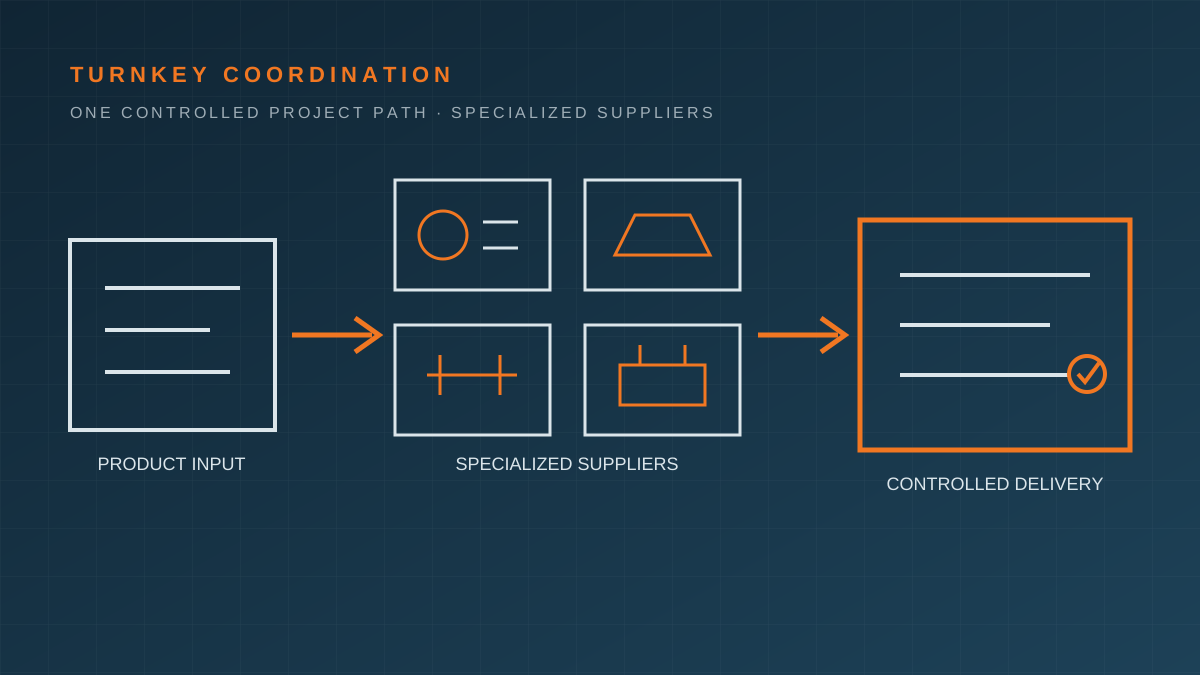
Turnkey should describe an operating model—not a vague promise
For KEY-CRON, turnkey manufacturing means coordinating an agreed product scope across the suppliers, files, samples, tests, quality gates, packing, and delivery decisions needed to move a product forward. It does not mean that KEY-CRON owns every factory, performs every engineering task, assumes every regulatory obligation, or includes unlimited changes for one quoted price.
The useful part of the model is a single English-speaking coordination path that keeps product requirements connected to factory actions. The legal, technical, quality, commercial, and logistics responsibilities remain explicit.
Where this model fits
It is particularly useful when:
- a small Western product team needs several manufacturing categories but does not want to manage every factory handoff;
- the main product includes a planetary gearmotor plus molded parts, tooling, metal structures, harnesses, electronics, assembly, or test;
- product files are incomplete and the team needs practical DFM and supplier feedback before committing;
- nominated suppliers must be retained but their interfaces need one controlled project record;
- prototype, pilot, and production evidence must stay connected to the released revision;
- English engineering communication and clear decision ownership matter more than a generic sourcing list.
Seven project stages
1. Requirement and feasibility review
Clarify the use case, product architecture, performance targets, quantities, timing, budget constraints, regulatory context, and current files. Separate confirmed requirements from assumptions and open decisions. If the project is outside the available capability or commercial fit, say so before supplier work expands.
2. Part, process, and supplier map
Break the product into parts, assemblies, processes, and interfaces. Identify customer-nominated sources, possible partner suppliers, long-lead items, tooling, test fixtures, customer-supplied materials, and the dependencies that determine sequence. A supplier is matched against the actual geometry, process, quantity, quality, certification, and timing—not only a category name.
3. DFM, quotation, and responsibility alignment
Coordinate manufacturability questions, assumptions, proposed changes, quotation boundaries, non-recurring costs, tooling ownership, inspection records, and the responsibility matrix. Quotations should identify exclusions, validity, quantity basis, Incoterm or delivery basis, payment milestones, and change conditions.
4. Prototype and sample review
Release the agreed sample revision, coordinate material and process, record deviations, inspect critical characteristics, and review fit and function with the customer. A sample is evidence for the defined revision and conditions; it is not automatic approval of every future production variable.
5. Pilot build and validation
Test the production-intent supplier path, tooling, work instructions, assembly sequence, test method, traceability, packing, yield assumptions, and handoffs. Close open deviations and confirm which evidence is required for production release.
6. Production readiness and release
Freeze the controlled baseline: BOM, drawings, CAD, specifications, firmware, approved samples, supplier and site, inspection plan, test limits, packaging, labels, change authority, and escalation contacts. Production begins only after the agreed release conditions are met.
7. Production, delivery, and change control
Coordinate agreed progress and quality checkpoints, nonconformance decisions, records, packing, and shipment readiness. Any proposed supplier, material, component, process, tooling, firmware, site, or inspection change follows the agreed notification and approval process.
Responsibility must remain visible
| Area | Customer / product owner | KEY-CRON coordination | Manufacturing supplier |
|---|---|---|---|
| Product requirement | Defines intended use, requirements, regulatory context, and final acceptance authority. | Clarifies inputs, interfaces, open decisions, and factory-executable requirements. | Reviews feasibility and identifies process-specific risks. |
| Design and changes | Approves product design, deviations, and changes unless authority is explicitly delegated. | Coordinates DFM, records decisions, distributes controlled revisions, and prevents informal changes. | Builds to the released data and requests approval before deviation. |
| Quality and validation | Defines critical requirements and approves the validation plan and results. | Connects risks to checkpoints, consolidates agreed evidence, and coordinates disposition. | Executes the agreed process, inspection, test, traceability, and corrective action. |
| Commercial and delivery | Approves scope, budget, payment, delivery terms, and launch decisions. | Aligns quotation boundaries, dependencies, status, packing, and shipment readiness. | Meets the accepted quotation, capacity, timing, packing, and shipment obligations. |
The exact matrix belongs in the project documents. “One contact” should simplify communication, not hide accountability.
The controlled project baseline
The baseline may include:
- BOM, drawings, CAD, specifications, reference samples, and revision index;
- supplier, manufacturing site, process route, tooling, fixtures, and customer-supplied assets;
- firmware, test software, configuration, serialization, and security handling;
- critical-to-quality characteristics, inspection method, sampling, test limits, and required records;
- approved materials, components, finishes, colors, alternates, and substitution authority;
- packaging, labels, manuals, accessories, palletization, shipping marks, and delivery terms;
- open-item log, deviation record, approval matrix, escalation path, and change process.
Without this baseline, a project can appear to move quickly while suppliers are building different interpretations.
Supplier selection and change control
KEY-CRON may recommend a long-term partner, qualify another specialist, or work with a customer-nominated source. Before commitment, confirm the legal entity, site, process, equipment, capacity, quality-system scope, certification validity, subcontracting, tooling location, traceability, commercial terms, and data access relevant to the work.
A lower price or shorter lead time does not authorize a supplier or process change. The notification threshold and approval authority should be written before production.
Quality gates and evidence
Useful gates include input release, DFM closure, sample release, first-article or fit approval, validation completion, pilot review, production release, and shipment release. Evidence may include dimensional results, material or component records, process or finish records, functional-test data, approved samples, nonconformance and rework history, serial or lot traceability, packing approval, and photographs.
Only the evidence named for the project is required. PPAP, FMEA, control plans, regulatory reports, RoHS/REACH declarations, or customer-specific formats are not automatic deliverables unless included in scope.
Commercial, logistics, and regulatory boundaries
Define whether KEY-CRON is quoting individual parts, a consolidated assembly, project coordination, logistics, or a combination. Confirm currency, taxes, tooling and fixture payments, MOQ, forecast assumptions, excess or obsolete material, cancellation, Incoterm, freight, insurance, customs documents, destination duties, warranty, and claim process.
KEY-CRON can coordinate information and supplier actions, but the customer retains responsibility for defining the product’s intended use and applicable market requirements unless a specific compliance task is contracted. Factory management-system certificates do not equal product certification.
Confidentiality, IP, and tooling
Before sharing sensitive files, align NDA coverage and which suppliers may receive which data. Record ownership and permitted use of drawings, firmware, test software, fixtures, molds, gauges, and samples. For customer-funded tooling, define marking, location, maintenance, production use, access, transfer conditions, and end-of-project disposition.
A direct English working path
The practical advantage for a small Western team is not the phrase “one-stop.” It is the ability to discuss drawings, tolerances, interfaces, test conditions, supplier feedback, deviations, and delivery decisions directly in English—while the relevant work is coordinated with specialized Pearl River Delta suppliers.
Connected paths
Place this capability inside the full project path.
Small Western teams rarely buy one isolated process. They balance the motion system, structural parts, electronics, testing, and delivery. These entry points help you continue from the right angle.
Start a coordinated program
Bring the product context—not only a purchase list.
A complete RFQ is helpful but not required for the first review. Identify what is already fixed, what remains open, and the decision your team needs to make next.
- Product overview, system architecture, current prototype, photographs, or use-case description
- Controlled BOM or part list, available drawings and CAD, revision status, and nominated suppliers
- Performance, interface, critical-to-quality, test, reliability, and applicable regulatory requirements
- Target sample, pilot, launch, and delivery timing, with known dependencies or long-lead items
- Prototype and annual quantities, tooling budget, commercial constraints, and customer-supplied material
- Required approval records, packing, labeling, Incoterm or delivery destination, and current project pain points
Related paths
FAQ
Questions to clarify before scoping this capability.
What does turnkey manufacturing mean at KEY-CRON?
It means one agreed project path for engineering inputs, supplier coordination, quotations, samples, validation, quality gates, production readiness, packing, and delivery. It does not mean every process is owned by KEY-CRON or that every possible task is automatically included.
Does KEY-CRON own all factories used in a turnkey project?
No. KEY-CRON works with specialized manufacturing suppliers, primarily in the Pearl River Delta, and identifies the applicable production path for the project. Supplier site, process, capacity, certifications, scope, and responsibilities are confirmed before commitment.
Can we keep an existing or nominated supplier?
Yes. A project may retain customer-nominated suppliers while KEY-CRON coordinates missing categories or selected interfaces. Information access, quotation authority, quality responsibility, logistics, and escalation paths must be agreed.
Who approves drawings, samples, and engineering changes?
The approval matrix is defined per project. The customer normally retains product and final approval authority; KEY-CRON coordinates review and records; each manufacturer remains responsible for executing the released requirements within its agreed scope.
How are IP, tooling ownership, and confidential files handled?
NDA, file access, permitted supplier disclosure, tooling ownership, storage, maintenance, transfer, and end-of-project disposition should be written into the commercial and project documents before sensitive data or tooling funds are committed.
Is turnkey coordination suitable for every project?
It is strongest for small and mid-sized teams with multi-part products, incomplete supplier coverage, or significant cross-supplier interfaces. Mature commodity purchases or very high-volume single-process programs may be more efficient through a direct nominated factory.