
Article
Planetary Gearmotor RFQ Checklist: 9 Inputs Engineers Need
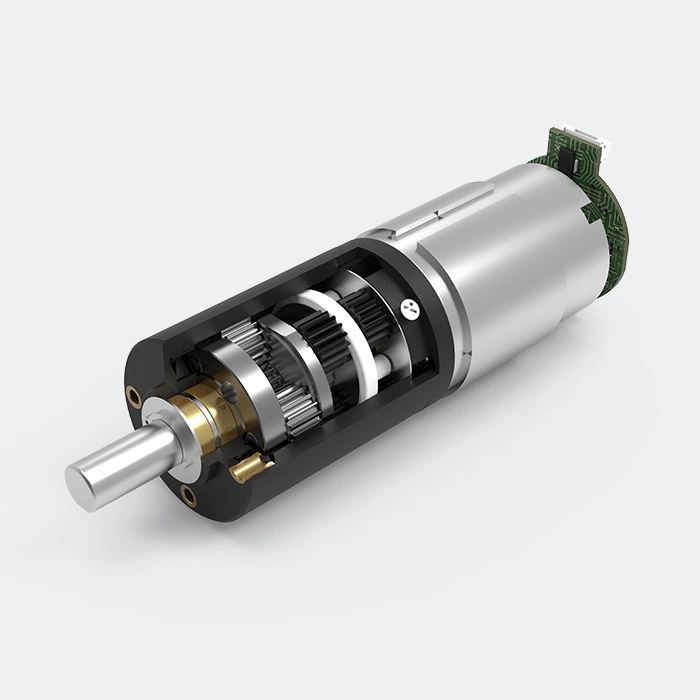
A useful planetary gearmotor request for quotation is not a long purchasing document. It is a compact engineering brief that explains what the mechanism must do and what constraints the gearmotor must fit.
The nine inputs below help an engineer evaluate the operating point, integration work, validation scope, and likely project path. Unknown values can remain open; clearly marking them is better than guessing.
1. Application and mechanism
Describe what the gearmotor drives and how motion reaches the load: direct drive, cable, belt, lead screw, linkage, wheel, valve, or another mechanism. Include a sketch or short video if the movement is difficult to explain in words.
For an automotive tailgate strut, for example, actuator geometry, stroke, movement time, vehicle mounting points, and load changes through the travel are relevant—not only the tailgate mass.
2. Target output speed or movement time
State output RPM when known. For a linear or articulated mechanism, travel distance and required cycle time may be more useful. Also note whether speed must remain controlled as the load changes.
3. Continuous, starting, and peak load
Separate normal running torque from starting, acceleration, holding, stall, and occasional peak conditions. If torque is unknown, provide force, lever arm, screw lead, efficiency assumptions, or measured current from the reference system.
4. Electrical input and control
Specify nominal voltage, voltage range, allowable current, motor type preference, controller constraints, direction control, braking, and feedback needs. Motor and gearbox selection should be evaluated together because current, speed, heat, and torque are coupled.
5. Installation envelope
Provide the maximum diameter, available length, mounting pattern, shaft centerline, nearby obstructions, and cable routing. A CAD envelope is particularly useful when the assembly must fit inside a strut, actuator, or compact enclosure.
6. Mechanical and electrical interfaces
Identify the output shaft, spline, coupling, bearing support, mounting face, connector, pinout, wire length, and housing requirements. Mark which interfaces are fixed and which may be adapted.
7. Duty cycle and service life
Describe run time, rest time, cycles per day, direction changes, expected life, and any unusual shock or back-driving condition. A gearmotor used for brief intermittent movement is evaluated differently from one operating continuously.
8. Validation conditions
List the temperature range, humidity, dust or water exposure, vibration, corrosion, noise, backlash, and any regulatory or material requirements. Define how important requirements will be measured—for example, noise at a stated distance, speed, voltage, and load.
9. Commercial and project context
Share prototype quantity, estimated annual demand, target sample date, production timing, delivery location, and whether tooling or non-recurring engineering is acceptable. These inputs affect the recommended development route, not only the quotation.
Files that make the first review faster
The most useful package normally includes:
- a dimensioned 2D drawing and STEP model;
- load, speed, current, or force data from the current mechanism;
- photos, video, or a physical reference sample;
- a list of fixed interfaces and open design decisions;
- target validation conditions and estimated volume.
If you only have part of this information, start with the application and the current constraint. KEY-CRON can use a structured engineering discussion to identify the missing decisions before a configuration is quoted.
For the engineering calculation itself, continue with How to Calculate a Planetary Gearmotor Ratio. For a project review, send the information currently available.
Frequently asked questions
Can I request a planetary gearmotor quote without knowing the exact ratio?
Yes. Provide the target output speed, load torque or force, voltage, mechanism, and installation envelope. The ratio can then be evaluated with the motor and gearbox as one system.
Which drawing format is most useful for a gearmotor RFQ?
A dimensioned PDF plus a STEP model is ideal. If CAD is unavailable, annotated photos, a physical sample, or a sketch showing the available space and interfaces can support the first review.
Do I need final production quantities before requesting a review?
No. An estimated prototype quantity, annual demand range, and target launch timing are enough for an initial discussion. These values help distinguish a standard modification from a fully customized program.