
Flagship application platform
28 mm Tailgate Strut Planetary Gearmotor
A 28 mm DC planetary gearmotor platform for tailgate strut motion, with project-specific interface, validation, and production coordination support.
Platform diameter
28 mmPrimary application
Tailgate strut motionArchitecture
DC planetary gearmotorProgram support
Interface & validation coordination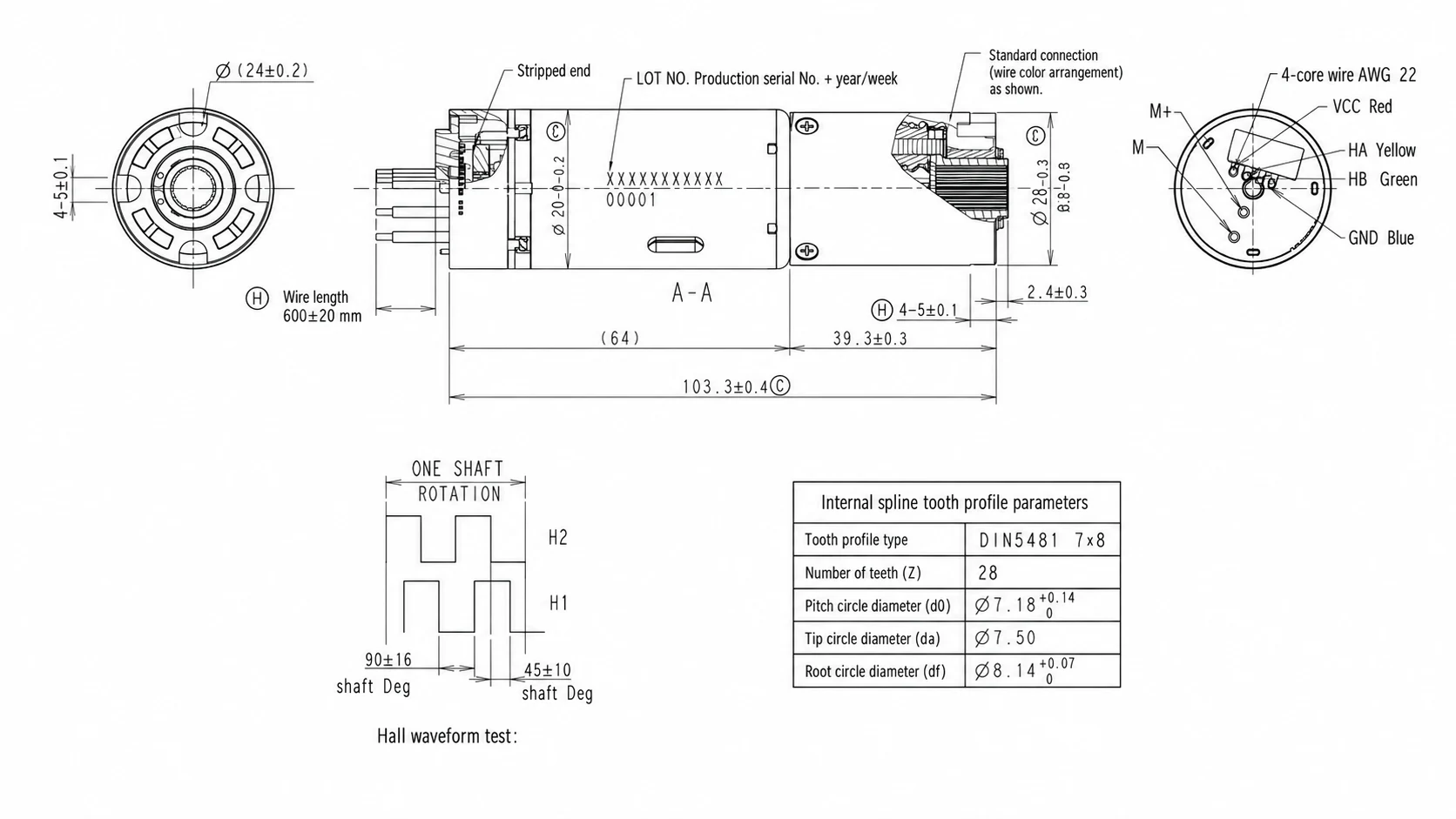
Tailgate strut selection
Start with the actual strut load case.
Tailgate strut motion requires the gearmotor, mechanical interface, load profile, and operating conditions to work together. Start with the required force or torque, travel timing, duty cycle, available envelope, and electrical architecture.
Map the motion requirement
Share the strut arrangement, target opening or closing behavior, load condition, and operating cycle.
Define the interfaces
Confirm the output connection, mounting, wiring, feedback needs, and available 28 mm installation space.
Validate the program
Align the proposed configuration with application-specific performance, noise, lifetime, and test requirements before release.
Tailgate program interfaces
Configure the system around the vehicle mechanism.
The 28 mm platform is a starting point. Mechanical, electrical, and validation requirements are defined around the tailgate strut program.
Ratio & motor direction
Select the gear ratio and motor direction around the required strut motion and load case.
Output interface
Define the shaft, spline, coupling, or other interface needed for the strut mechanism.
Wire & connector
Confirm lead length, connector, pinout, and any required signal or feedback interface.
Mounting package
Coordinate mounting geometry, housing constraints, and integration with the surrounding mechanism.
Noise & lifetime targets
Agree target conditions and test methods for projects with acoustic or endurance requirements.
Production integration
Coordinate samples, validation, assembly, packing, and delivery readiness with one project path.
Interface reference
Define the mechanical and electrical handoff early.
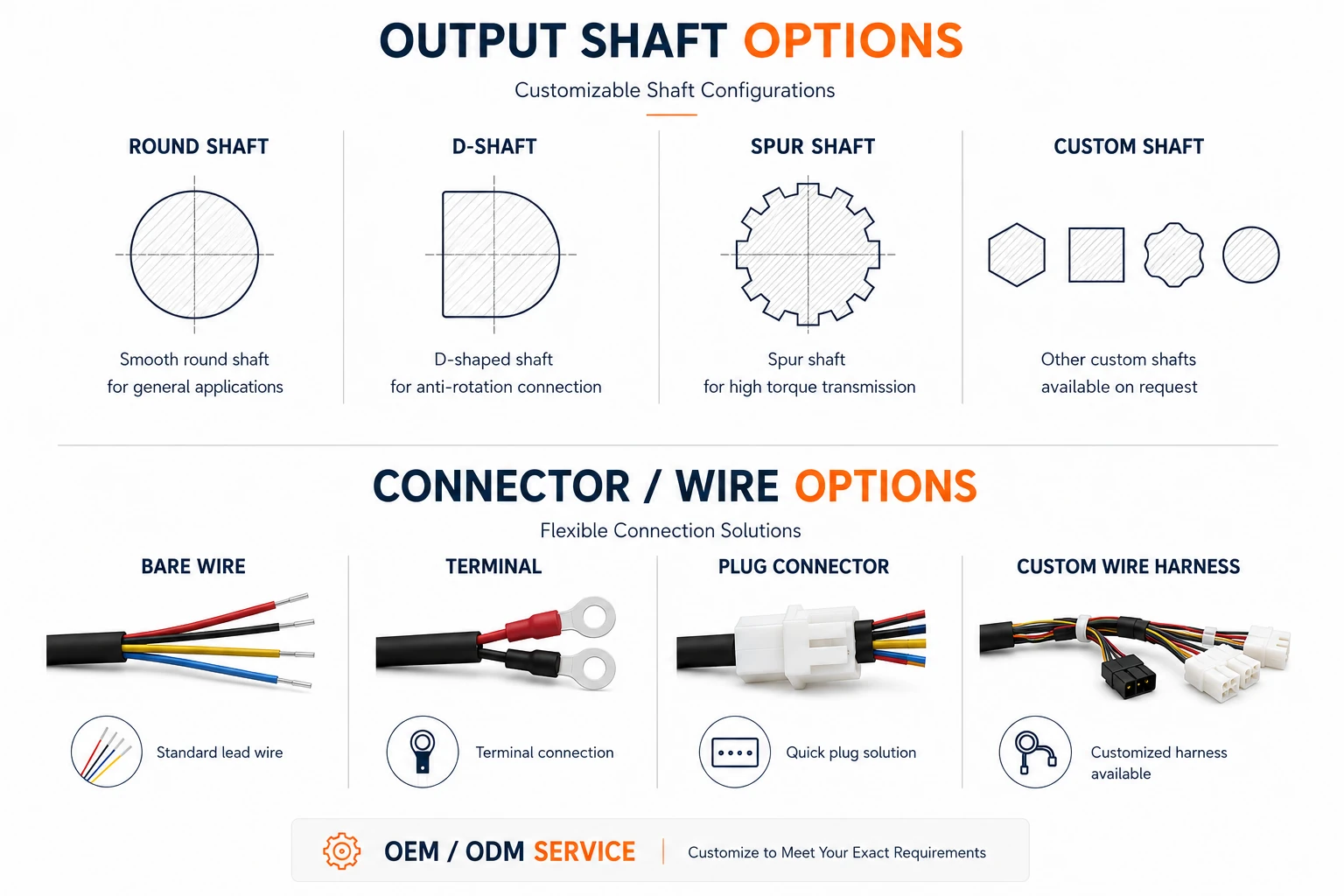
Output shaft form, wire arrangement, connector, pinout, and mounting details should be agreed against the tailgate mechanism. The options shown are representative references, not a fixed specification.
Validation path
Agree the verification path before release.
The applicable tests are defined by the project. A typical path connects incoming and in-process control with functional, torque, noise, and final inspection checks.
Incoming control
In-process control
Functional check
Torque check
Noise check
Final inspection
Project documentation
Confirm the documents needed for your program.
Documentation is agreed by project scope and may be supplied with samples, approval builds, or production shipments.
- Product datasheet
- Dimensional or interface drawing
- Project-specific test records
- Packing list
- Material or compliance declaration on request
- Program-specific quality documentation on request
Tailgate strut project checklist
Send the inputs that define the motion system.
If you have drawings, a strut sample, or a reference product, include them. If not, start with the requirements you know.
- Strut or mechanism drawing
- Target opening / closing behavior
- Load, force, or torque requirement
- Voltage and electrical architecture
- Available 28 mm installation envelope
- Output and mounting interface
- Noise target and test conditions
- Lifetime or duty-cycle requirement
- Expected annual quantity and project timing
A focused platform for tailgate strut motion
This 28 mm DC planetary gearmotor platform is KEY-CRON’s flagship focus for vehicle tailgate strut projects. It is intended to support controlled motion around a specific mechanism, rather than be selected only by a catalog number.
The engineering discussion should confirm the strut geometry, load case, target movement, available space, output interface, electrical connection, noise expectation, and expected durability before a configuration is released.
Product information and validation
The interface drawing on this page is provided as an indicative engineering reference. Final configuration, drawings, electrical definition, performance data, and validation plan are supplied or confirmed for the agreed project version.
FAQ
Common questions before a project starts.
Is the 28 mm tailgate strut gearmotor a fixed catalog model?+
It is a focused platform for tailgate strut motion, not a one-size-fits-all catalog promise. Final ratio, output interface, wiring, noise target, lifetime requirement, and approval tests are confirmed around the actual mechanism.
What information do you need to recommend a configuration?+
The most useful inputs are the strut or mechanism drawing, target opening and closing behavior, load or torque requirement, voltage, available 28 mm envelope, output interface, noise target, lifetime requirement, annual quantity, and timing.
Can the output shaft, connector, and mounting be customized?+
Yes. Shaft or spline form, coupling interface, wire length, connector, pinout, mounting geometry, and surrounding housing constraints can be discussed as project-specific interfaces.
How do you handle noise and lifetime requirements?+
Noise and lifetime targets should be written into the project requirement with test conditions. We then coordinate the proposed configuration and validation path before sample or production release.
The drawing and interface information on this page are indicative of the 28 mm platform. Final dimensions, electrical connection, performance, noise targets, lifetime requirements, and application approval must be confirmed for the specific tailgate strut program.